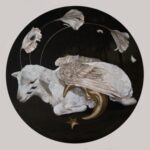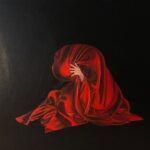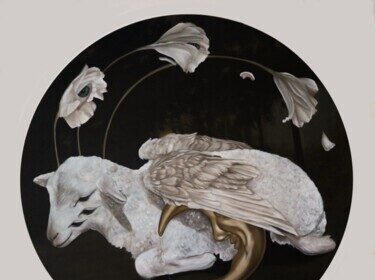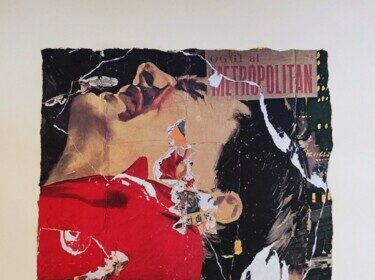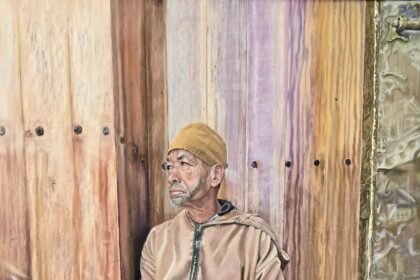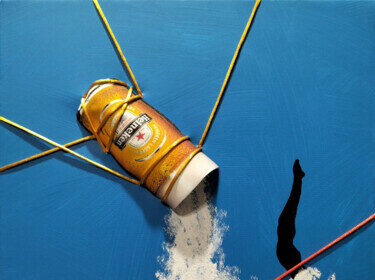


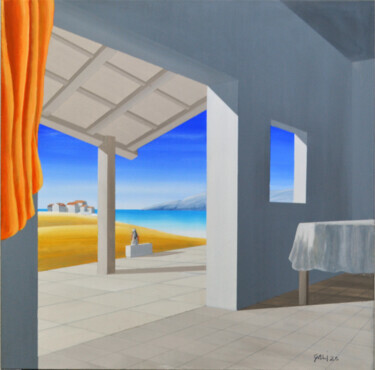
The careers of artists are often shaped by a lifelong dialogue between observation, creativity, and craftsmanship. For Gaetano Ligrani, this dialogue has unfolded across multiple disciplines, blending the precision of architecture, the visual language of design, and the emotional freedom of painting and sculpture. Throughout decades of creative exploration, the contemporary Italian artist has cultivated a practice that reflects both technical mastery and a deeply personal search for artistic identity. His work stands as a testament to the belief that creativity knows no boundaries and that every discipline can enrich another.
Born in Italy, Gaetano Ligrani displayed a remarkable fascination with art from his earliest childhood. While many children discover creativity through play, his attraction to drawing materials was immediate and instinctive. Pencils, brushes, paints, and blank sheets of paper were not merely tools—they were invitations to imagine, experiment, and communicate ideas visually. This early passion would remain a constant presence throughout his life, quietly guiding every important decision he made.
As he grew older, his artistic interests naturally expanded beyond drawing into broader creative fields. Rather than viewing art as separate from design or architecture, Ligrani recognized that all three disciplines shared a common foundation: the ability to shape ideas into meaningful visual forms. This realization inspired him to pursue formal studies in design and architecture, disciplines that offered both intellectual challenge and opportunities to refine his artistic sensibilities.
His education became much more than professional preparation. It provided a framework through which he could investigate aesthetics, proportion, structure, and materiality while nurturing the creative instincts that had accompanied him since childhood. Design encouraged clarity of communication, architecture introduced discipline and spatial thinking, and together they formed a solid foundation that would later influence his work as a visual artist.
In 1972, Gaetano Ligrani began what would become a distinguished professional career in design and architecture. Over the years, he gained recognition for projects that demonstrated technical excellence, creativity, and thoughtful problem-solving. His work earned respect within professional circles, establishing him as a designer and architect capable of combining functionality with visual elegance.
Yet even as his professional achievements grew, another creative ambition continued to develop beneath the surface. Painting and sculpture, long-standing passions that had never disappeared, gradually moved closer to the center of his life. Rather than treating fine art as a separate pursuit, Ligrani allowed it to evolve alongside his architectural and design practice, creating a rich dialogue between disciplines that continues to define his artistic identity.
For Ligrani, art is far more than a profession or pastime. It represents an enduring emotional necessity—a deeply rooted impulse that has accompanied him throughout his life. This internal motivation has consistently inspired him to create, explore, and question, transforming artistic practice into a lifelong journey of personal discovery. His commitment to art reflects not external expectations but an authentic desire to understand both himself and the world through visual expression.
The artist’s studio became the heart of this exploration. Within this private creative space, Ligrani spent countless hours experimenting with techniques, materials, and compositional ideas. Every new project represented another opportunity to investigate different forms of expression, often requiring patience, revision, and the willingness to embrace uncertainty. Rather than pursuing immediate perfection, he approached each work as part of an ongoing process of learning and refinement.
Experimentation has remained one of the defining characteristics of his creative philosophy. Throughout the years, Ligrani has explored numerous artistic methodologies, allowing intuition and experience to guide his development. Some works emerged through careful planning, while others evolved through spontaneous discovery. This openness to experimentation enabled him to continually expand his visual language while maintaining a strong sense of artistic authenticity.
Periods of uncertainty have also played an important role in his evolution. Like many accomplished artists, Ligrani understands that creative growth often requires moments of doubt, revision, and reconsideration. Every abandoned idea, every unsuccessful experiment, and every unexpected breakthrough contributed to a deeper understanding of his own artistic voice. Rather than viewing these experiences as obstacles, he embraced them as essential steps within the creative process.
His background in architecture and design has profoundly influenced the way he approaches fine art. Years of working with structure, proportion, geometry, and materials have provided him with exceptional technical sensitivity. These disciplines taught him to appreciate balance, composition, and spatial relationships—qualities that naturally extend into his paintings and sculptures.
Material exploration occupies a particularly significant place within his artistic practice. Architectural experience cultivated an appreciation for the unique characteristics of different materials, encouraging careful selection and thoughtful handling. Whether working with paint, sculptural media, or mixed materials, Ligrani approaches every element with both technical understanding and creative curiosity. This attention to materiality gives his work a refined physical presence while supporting its conceptual depth.
At the same time, fine art offers freedoms that architecture cannot always provide. While design often responds to practical requirements and functional objectives, painting and sculpture allow unrestricted exploration of emotion, symbolism, and imagination. Ligrani embraces this contrast, using his artistic practice as a space where intuition can guide decisions without the limitations imposed by practical design considerations.
His multidisciplinary background also contributes to the visual harmony evident throughout his work. Architectural thinking encourages careful organization, while artistic intuition introduces spontaneity and expressive energy. These seemingly opposite qualities coexist naturally within his creative process, resulting in works that balance structure with emotion, discipline with freedom, and precision with imagination.
Over the course of his long career, Gaetano Ligrani has demonstrated that artistic identity is not confined to a single profession or medium. Instead, it evolves through continuous curiosity, lifelong learning, and the willingness to move between different creative worlds. His achievements in design and architecture have strengthened rather than limited his artistic development, providing valuable insights that continue to enrich his paintings and sculptures.
Today, Ligrani remains committed to exploring the limitless possibilities of visual expression. His studio continues to serve as a place of reflection, experimentation, and creative renewal, where decades of experience meet an enduring desire to discover new artistic directions. Every work reflects the accumulated knowledge of a lifetime spent observing, designing, building, and creating.
Gaetano Ligrani’s artistic journey illustrates the powerful connections that exist between architecture, design, and fine art. Guided by an innate passion for beauty and creative exploration, he has built a career that transcends disciplinary boundaries while remaining deeply personal. Through his ongoing dedication to painting, sculpture, and artistic experimentation, he continues to demonstrate that true creativity is not defined by medium but by the relentless pursuit of meaningful expression.